Skip to content

Case study

Reading the Microdosing Survey

From a Scientific Reports PDF to a published course.

The source is Anderson and colleagues, 2021: a survey of adults who microdose psychedelics and a comparison group. The course walks through who was studied, what participants reported, and where a self-selected survey cannot support a stronger claim.

Audience
Clinicians reading the study
Length
About 30 minutes
Shape
Course with an outline
Grounding
Every block cited

The source and the published course

The PDF the builder cited, and the course it produced. Open either: the paper is the material, the course is a reading of its findings and limits.

What was decided

These are the answers given in the recording, and what the academy then held.

  1. Step 1

    Who it is for

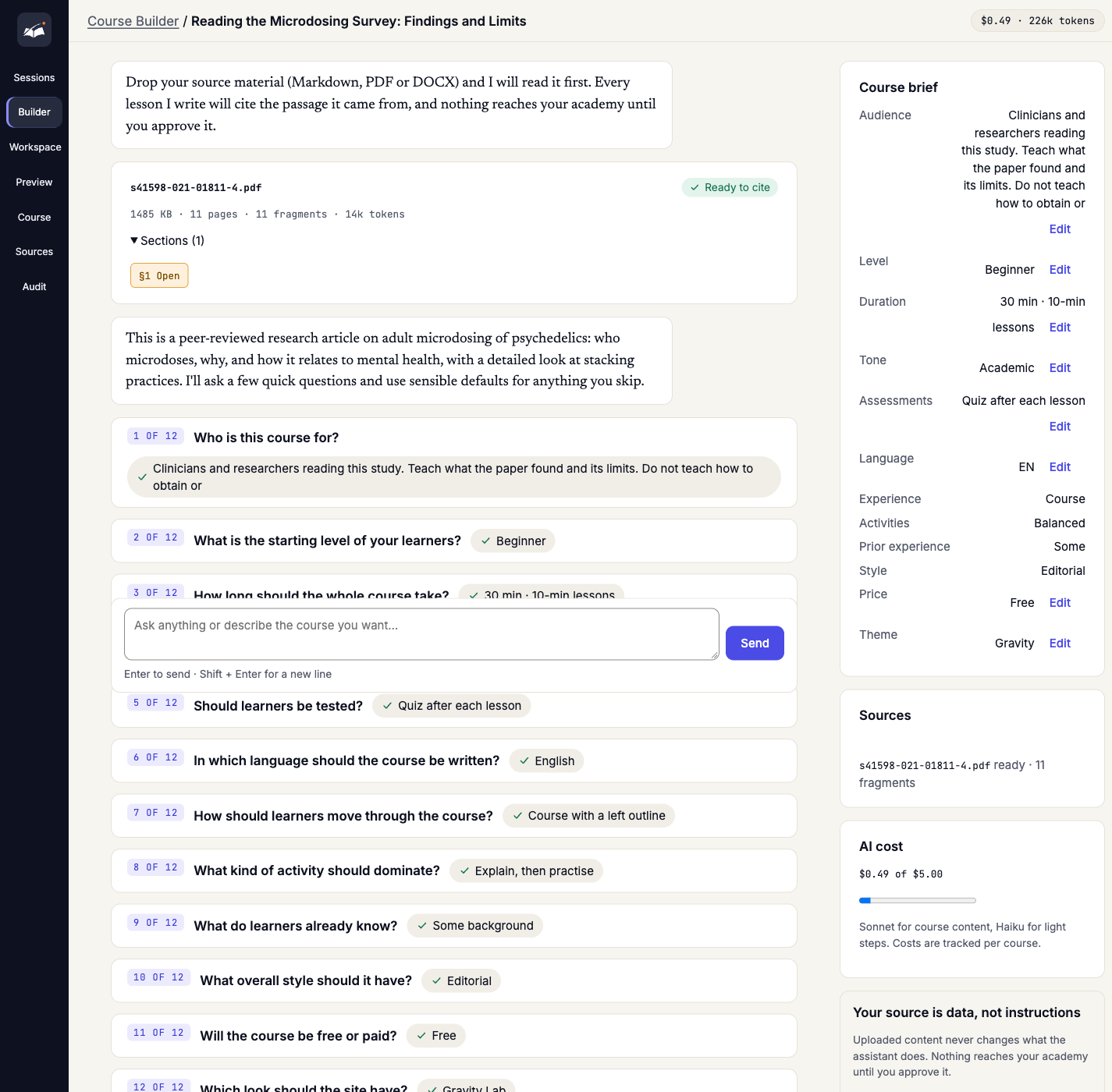
    Clinicians and researchers reading the study. Teach the findings and the limits. Beginner, academic tone, a quiz, English.

  2. Step 2

    How it should feel

    A standard course with an outline. Balanced activity, some prior knowledge, editorial style. No design system was uploaded.

  3. Step 3

    The outline

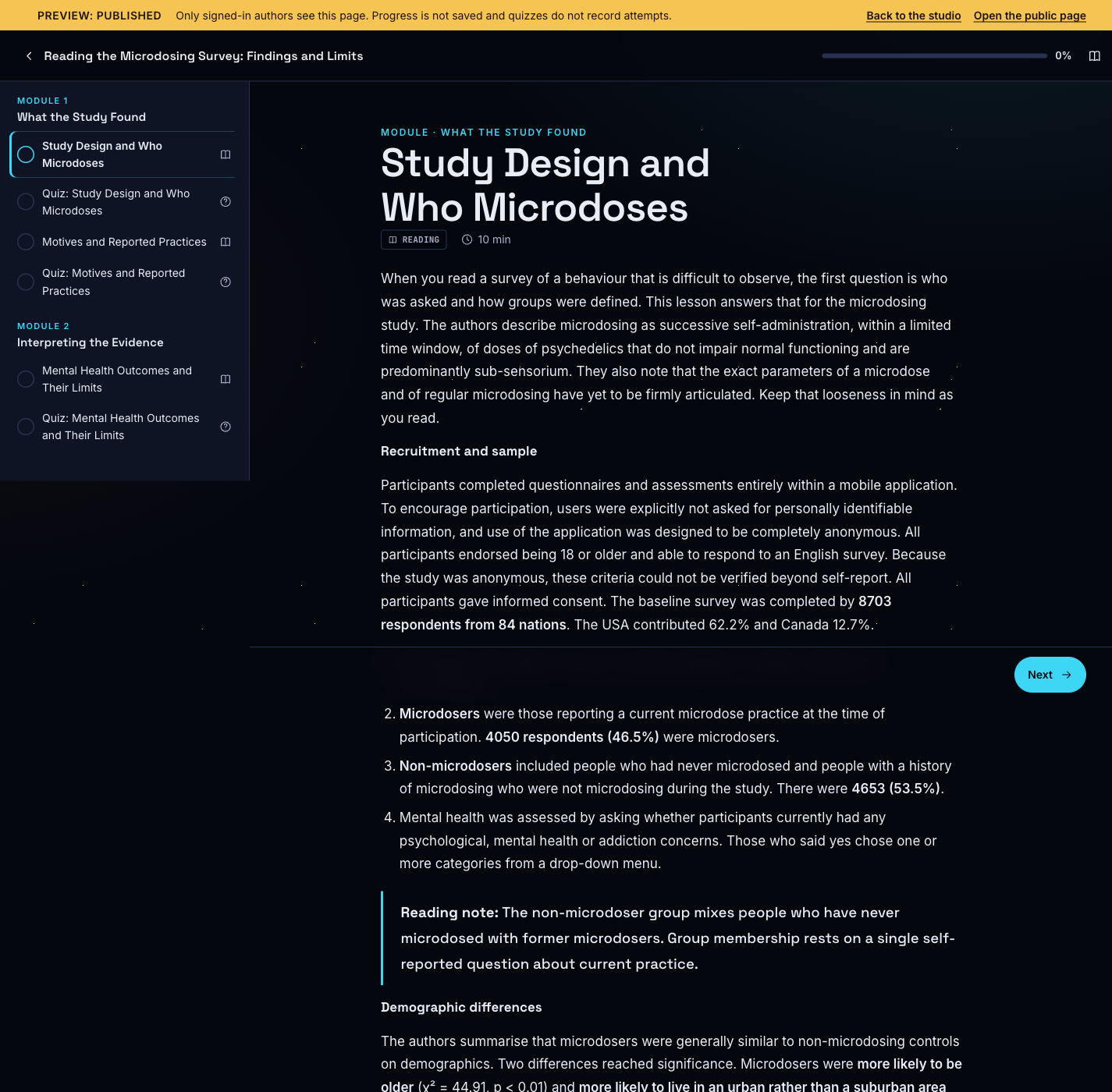
    Two modules: what the survey found, and where the evidence stops. Six lessons, including a closing check.

  4. Step 4

    The checks

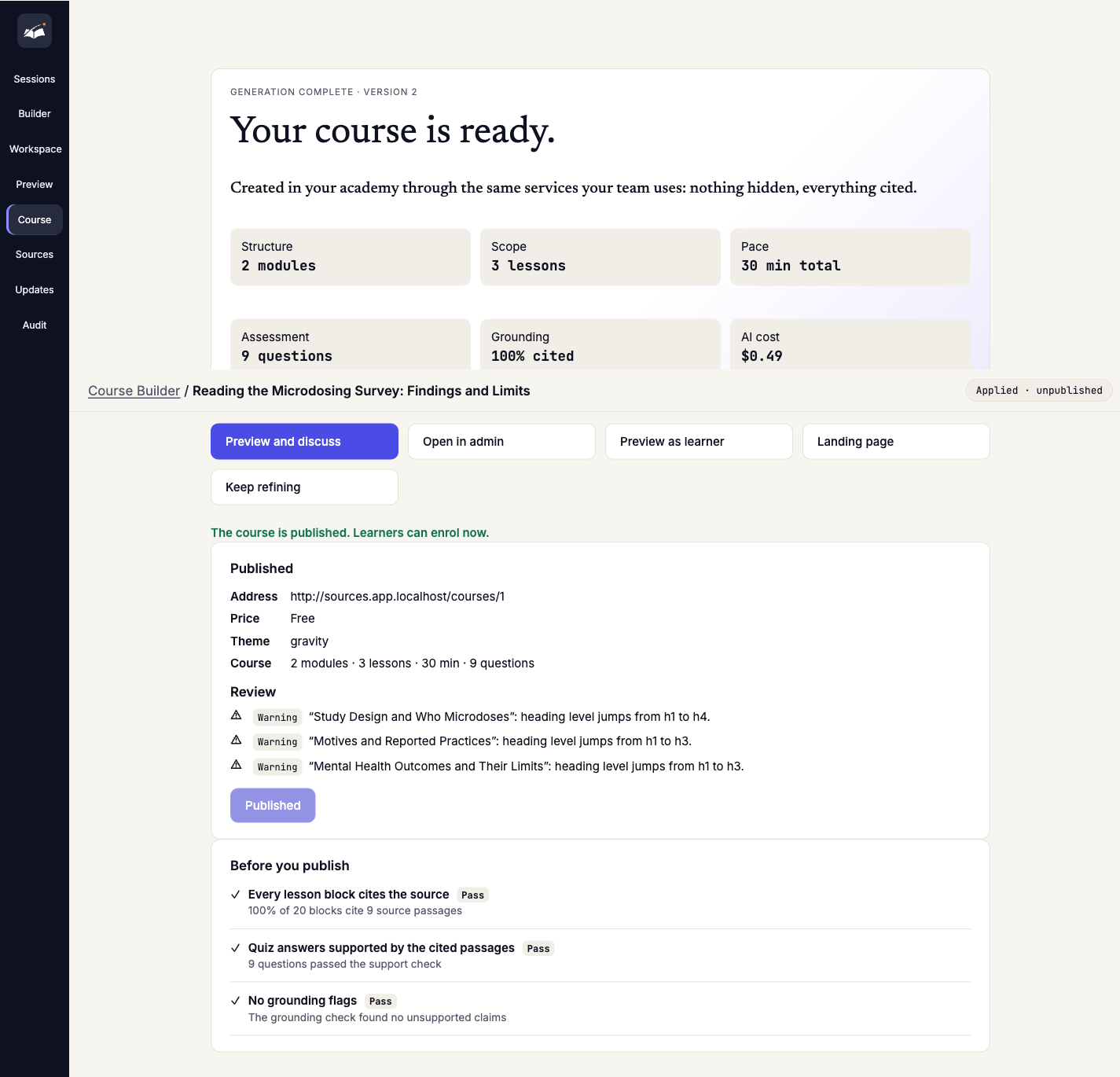
    Every lesson block cites the paper. Nine questions passed the support check. No grounding flags.

  5. Step 5

    Published

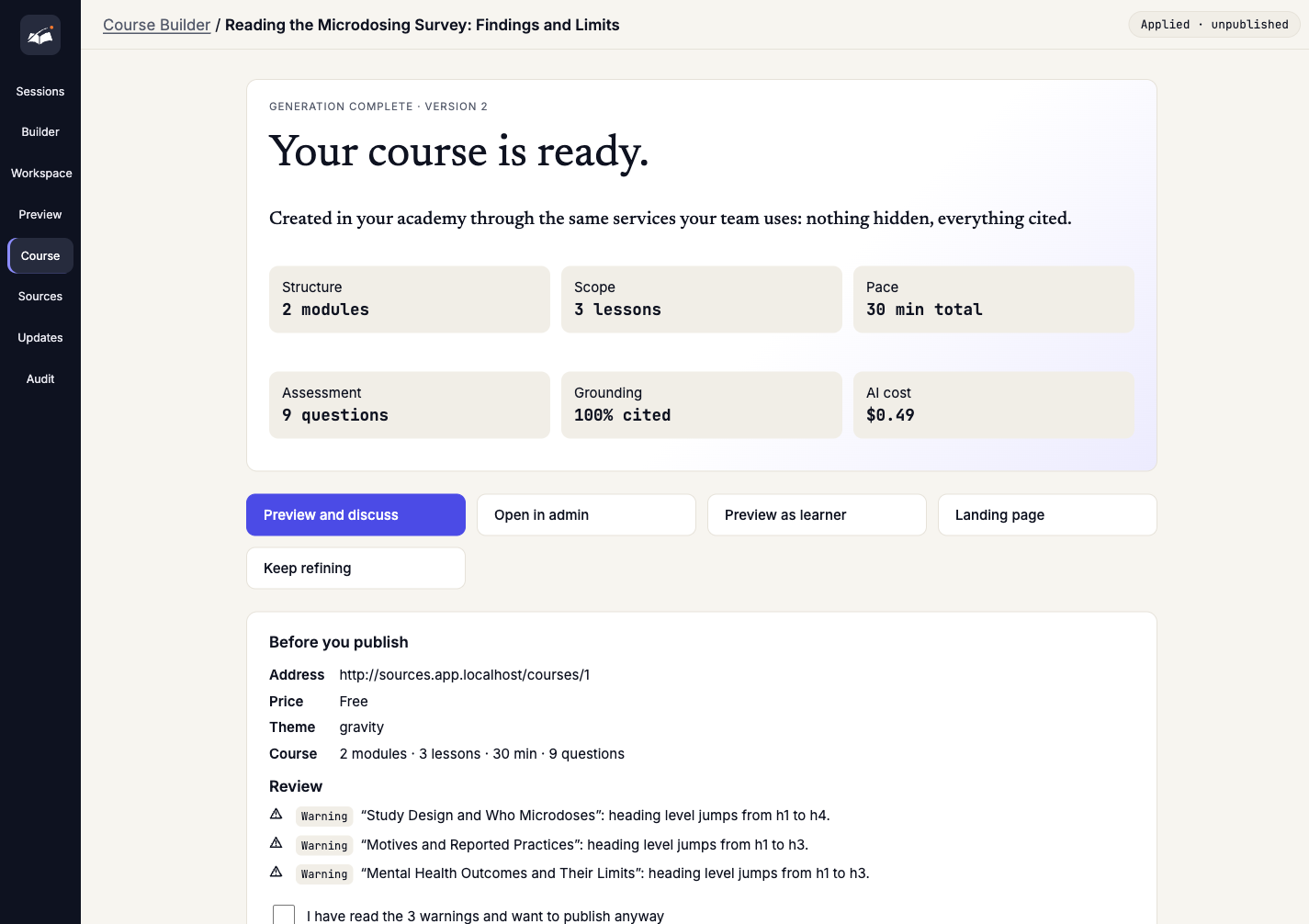
    Free, Gravity theme, about 30 minutes. Heading-level warnings were shown and acknowledged before publish.

Each screen, in order

Arrows at the top move through the Studio screens. The note sits above the image, and the image fills the width. Open it for full size.

1 / 12
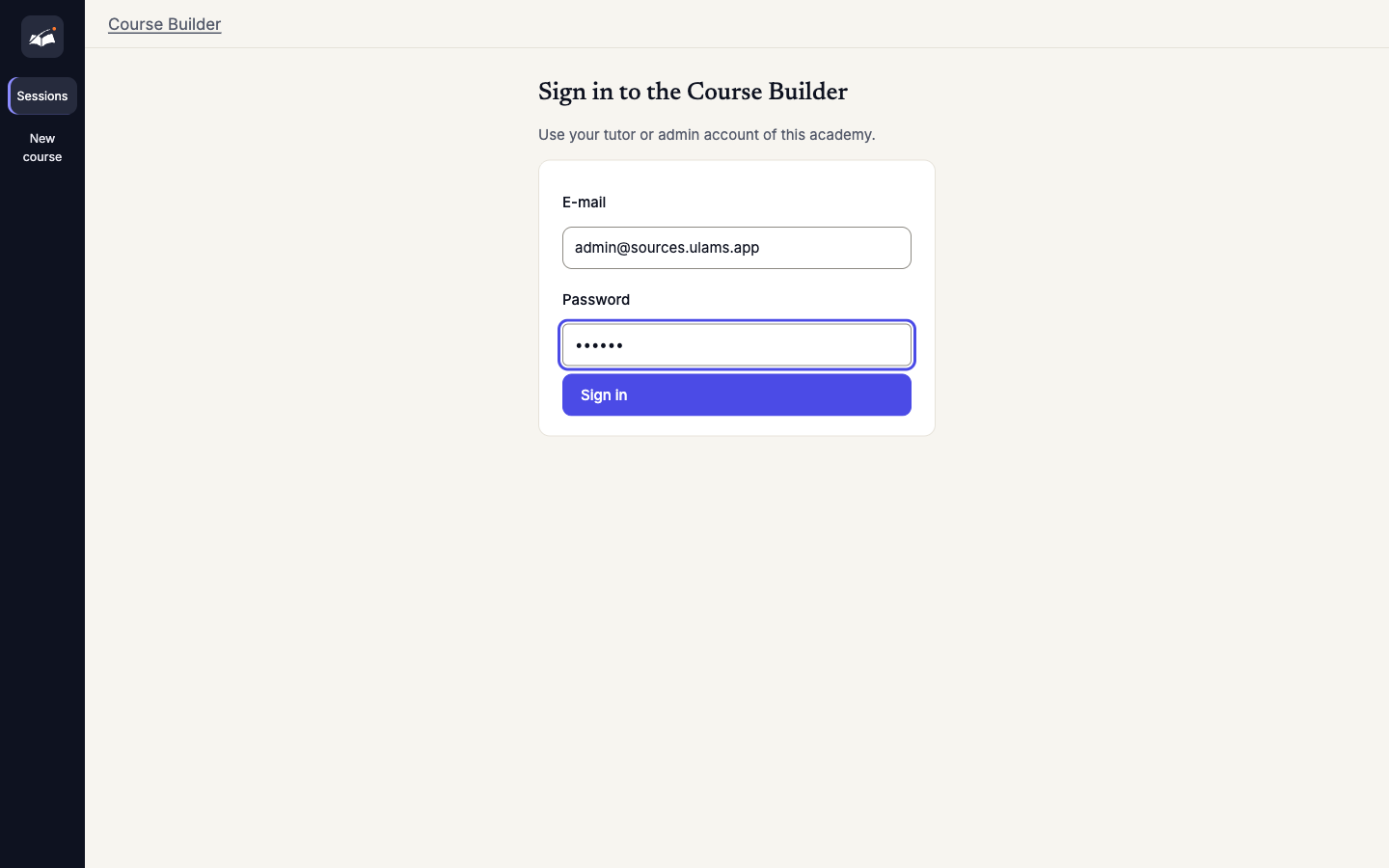
Sign in to the Studio of the academy used for this recording.
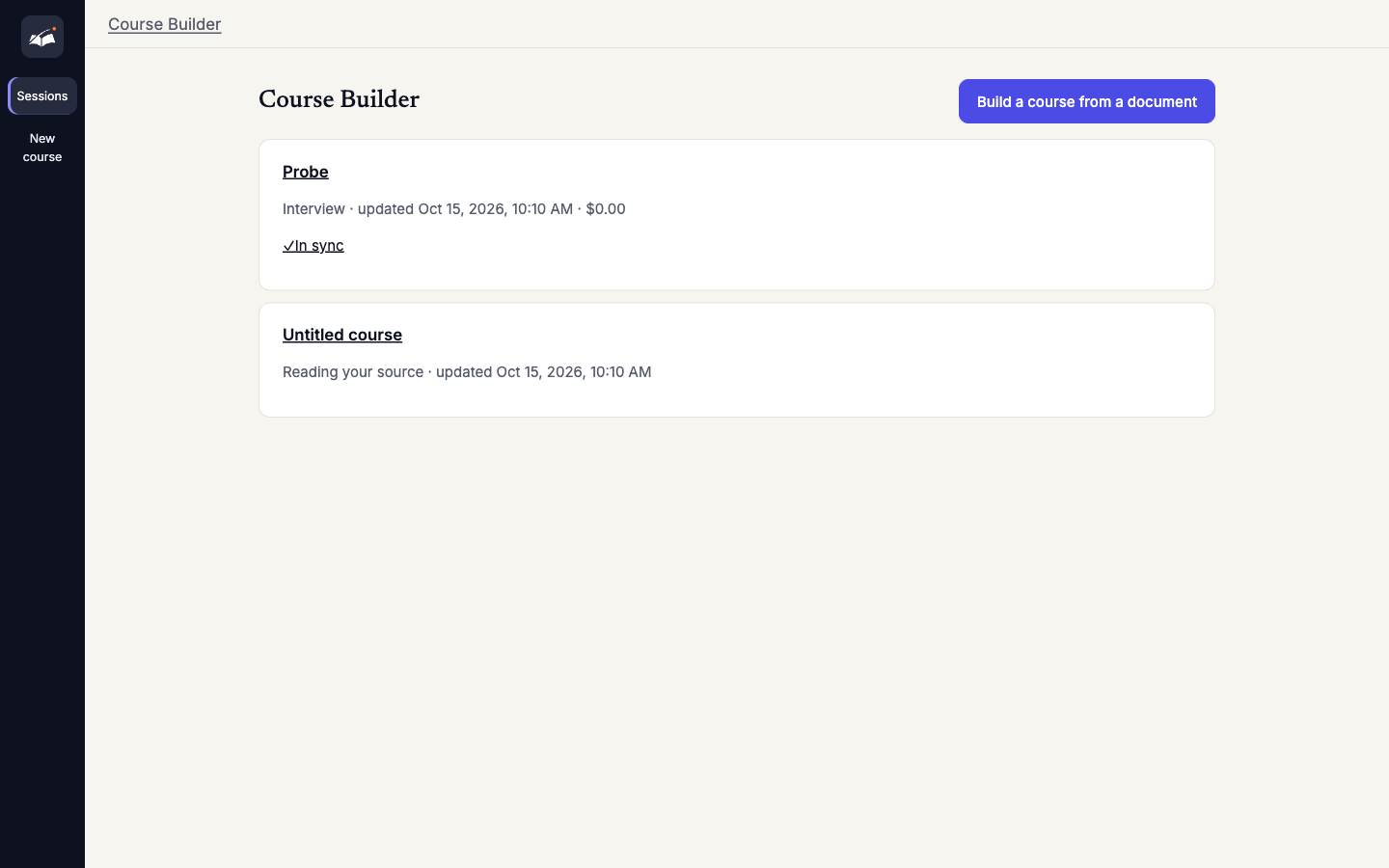
The Studio home, before a source is uploaded.
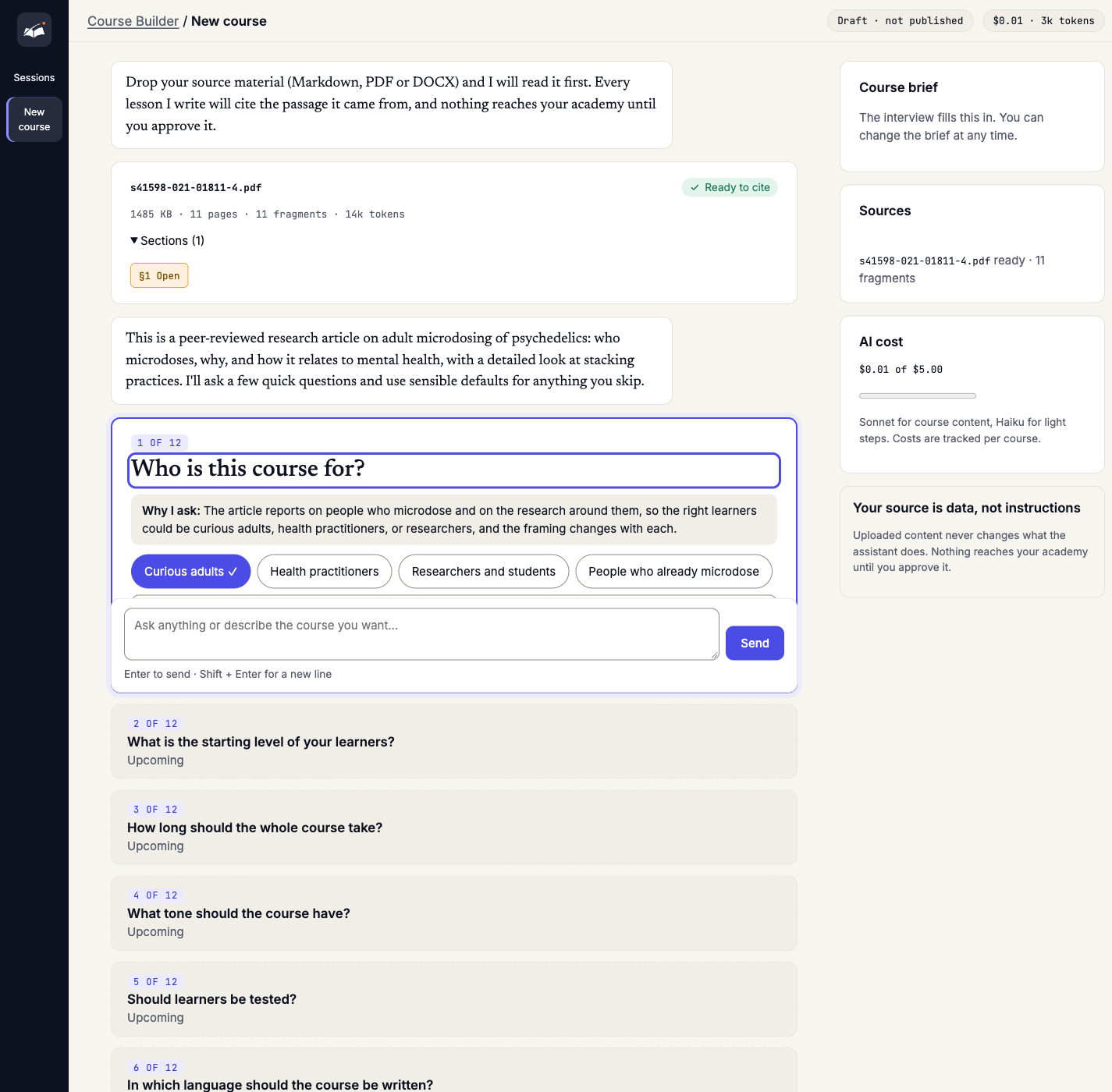
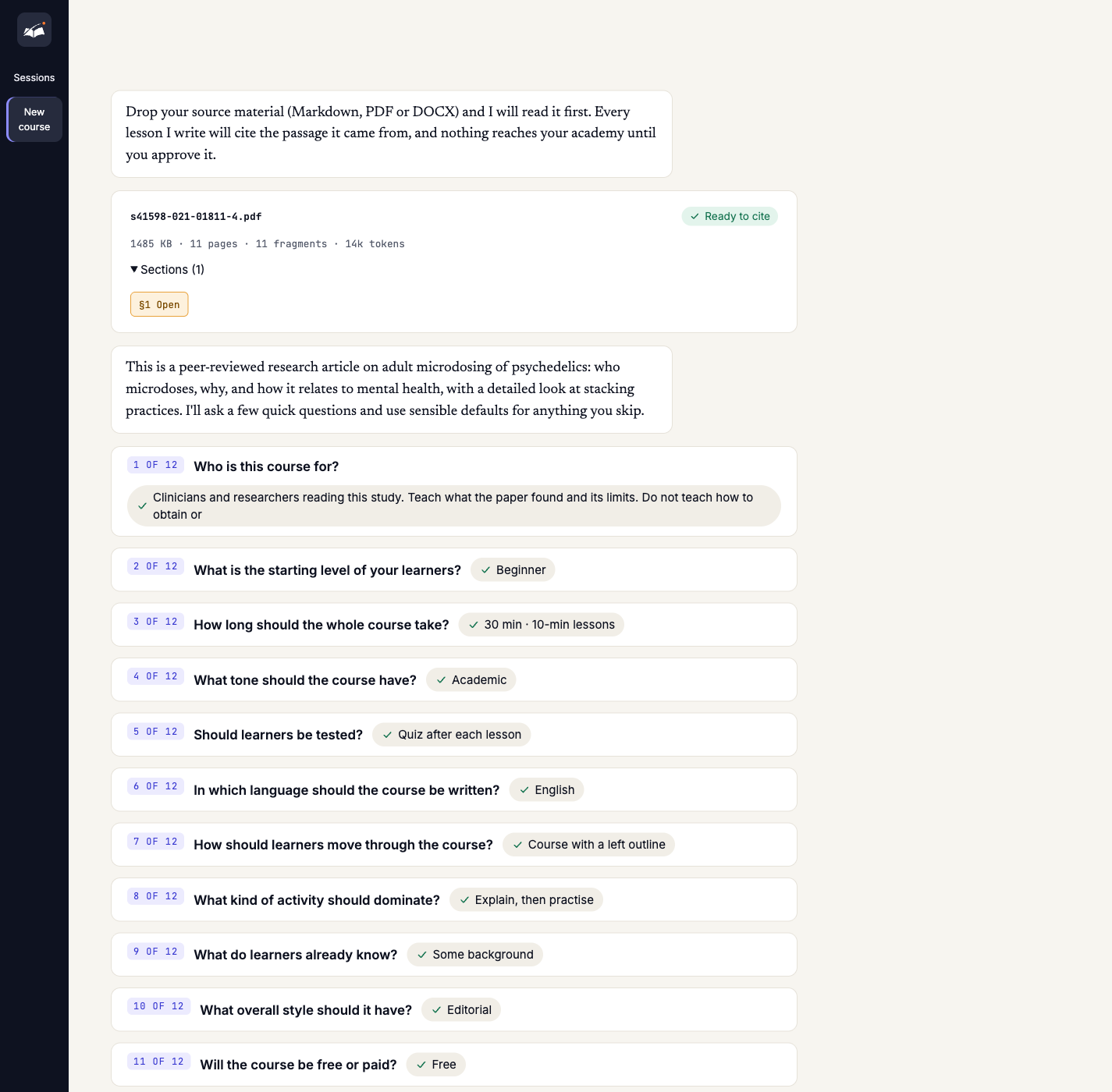
The first question asks who the course is for. The answer is clinicians and researchers reading the study: teach the findings and the limits.
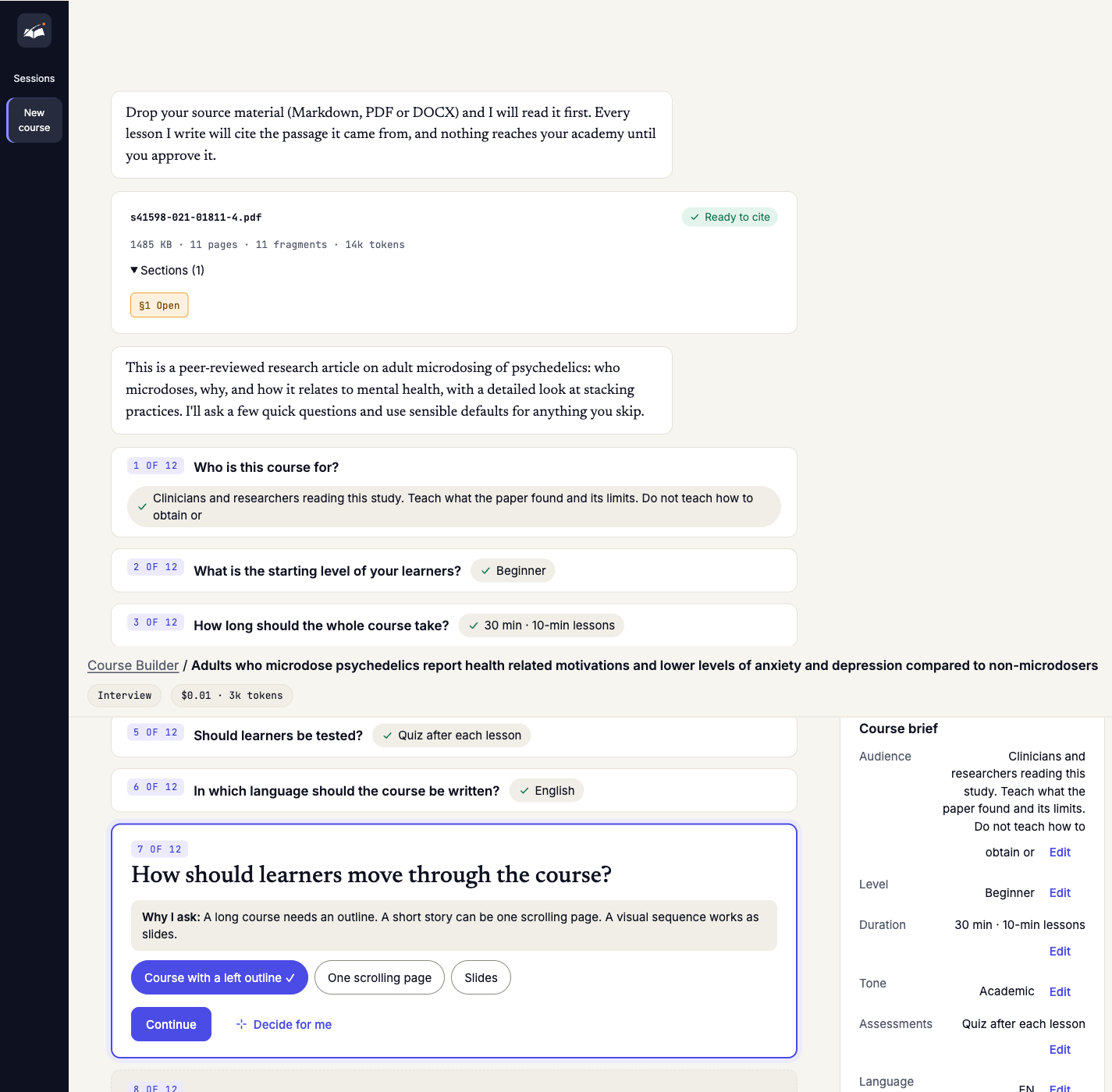
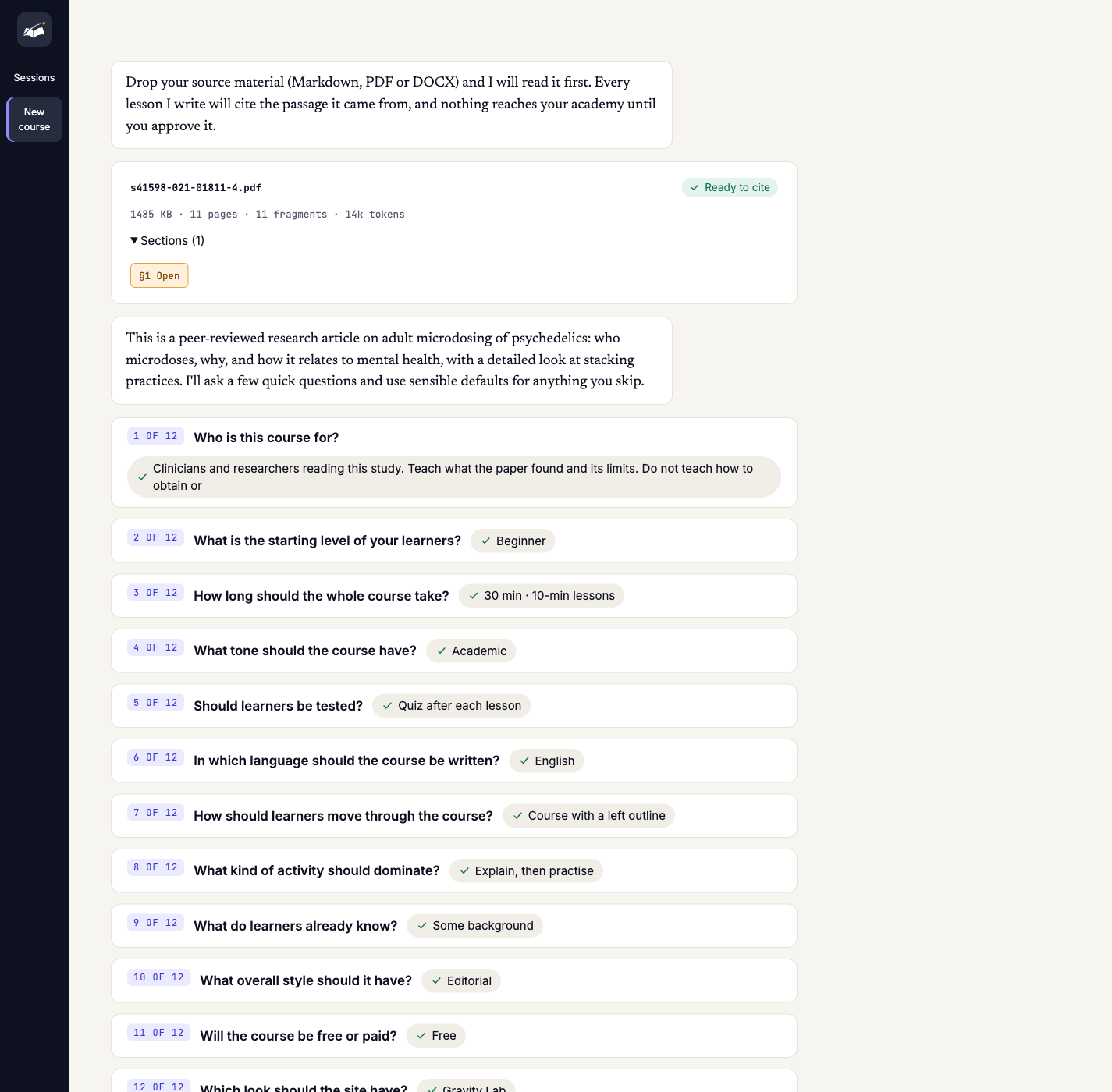
The interview asks how learners should move: a course with an outline, one scrolling page, or slides. This run chooses the standard course.
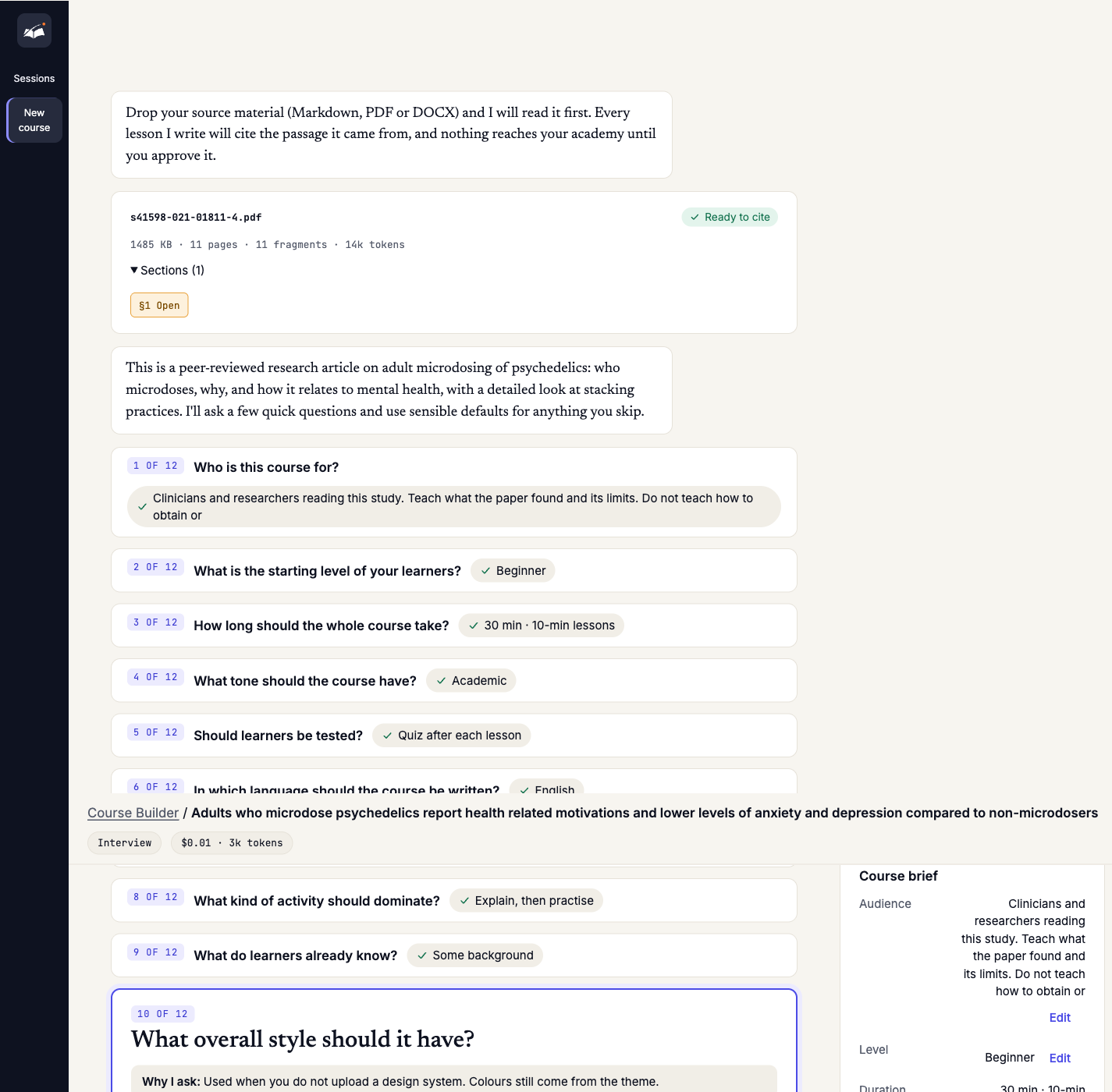
No design system was uploaded, so the interview asks for an overall style. This run chooses editorial.
The proposed outline: Reading the Microdosing Survey: Findings and Limits. Two modules, six lessons. Writing starts only after Approve.
Lessons are generated against the cited pages of the paper. The course is not published at this point.
Apply creates the course through the academy's own services. The author chooses this step.
Before publishing: every block cites the paper, quiz answers are supported, and the grounding check reports no unsupported claims.
The course is published. Heading warnings were listed and acknowledged. The button now reads Published.
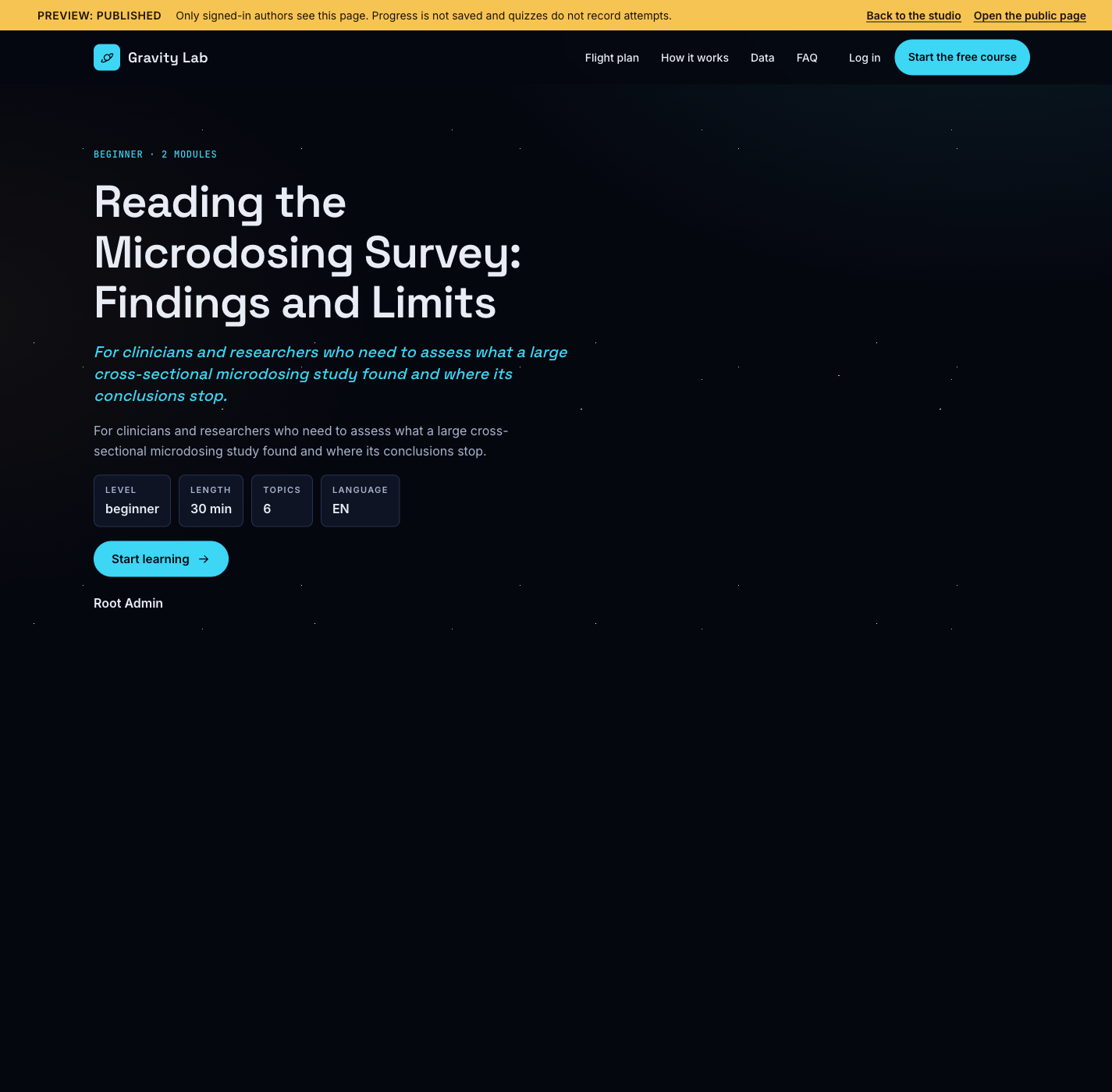
The learner view of the published course, about 30 minutes, in English, on the Gravity theme.
A lesson opened from the outline. The page keeps the source the builder cited.

The interview, the outline and generation

Sign in, upload the PDF, answer every question, approve the outline, and wait while the lessons are written from the cited pages.

Apply, publish and open the course

The author applies the course, reads the checks, acknowledges the heading warnings and publishes. The recording then opens the course as a learner.

The stablecoin report

From a Scientific Reports PDF to a published course.